NotesRelationship Intelligence4 mins read699 words
What Is an AI Relationship Assistant?
 Virre Team · November 27, 2026
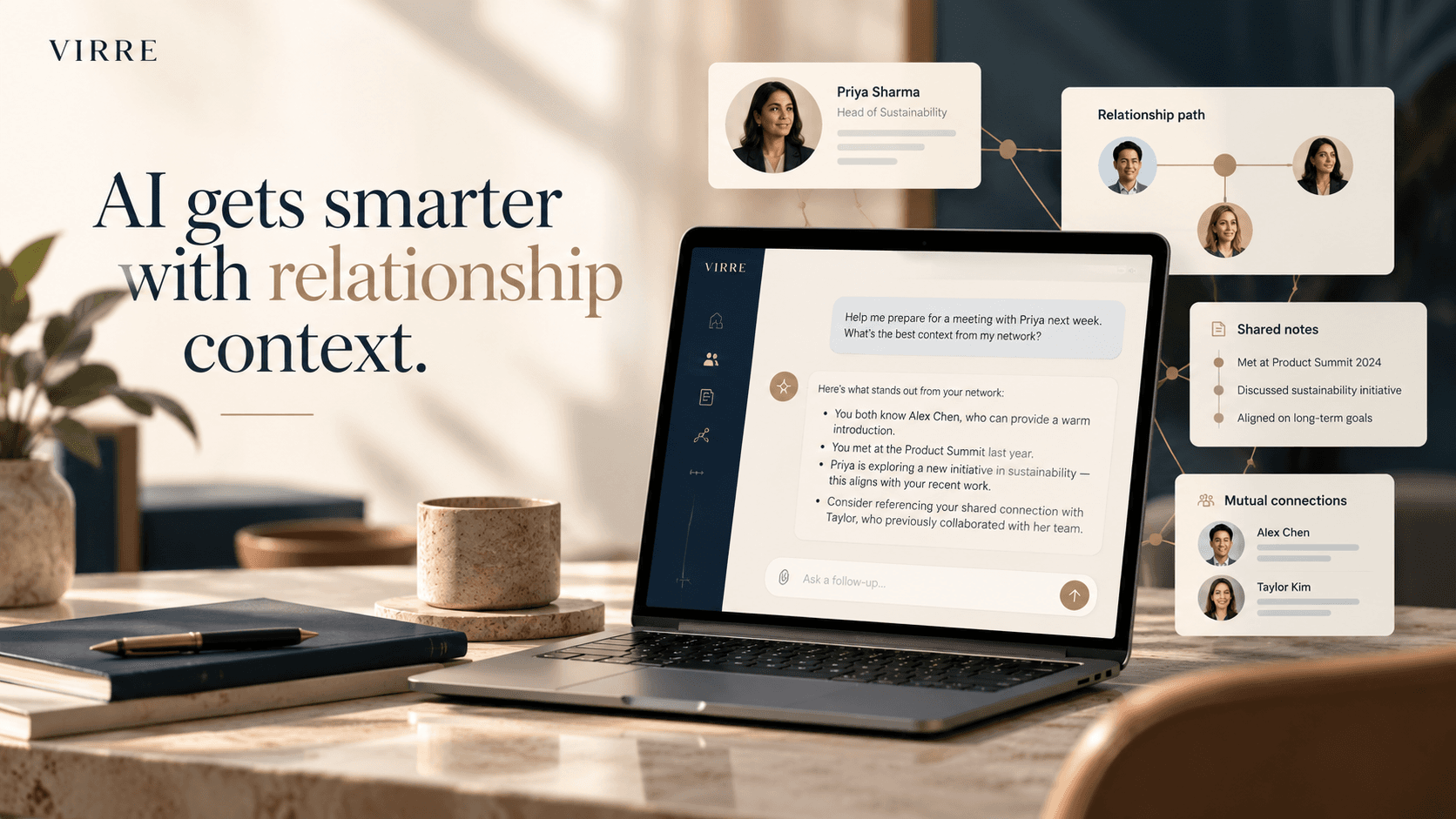
What Is an AI Relationship Assistant? sounds like a narrow software question, but the real issue is human: define an assistant that can reason over contacts, notes, history and goals while keeping permissions and human approval clear.
The core idea is simple: define an assistant that can reason over contacts, notes, history and goals while keeping permissions and human approval clear. The useful version of this article is not another generic networking checklist; it should help the reader make a better decision about real people, real context and the next action that follows.
01The useful layer is context#
AI becomes meaningfully different when it can work with real relationship data and define an assistant that can reason over contacts, notes, history and goals while keeping permissions and human approval clear. Without that context, even a very capable model can only give generic networking advice or generate polished language around assumptions.
This is especially important as relationship tools move into general AI assistants, because the interface may look simple while the underlying questions about permission, identity resolution and context become more important.
02Reasoning matters more than drafting#
The most valuable questions usually happen before a message is written: who should I contact, why is this person relevant, how strong is the relationship, who can introduce me and what changed recently? Message generation is useful only after those questions are answered well.
This is especially important as relationship tools move into general AI assistants, because the interface may look simple while the underlying questions about permission, identity resolution and context become more important.
03Explainability and permissions are not optional#
Relationship data can include private notes, work history, emails and social context. A trustworthy system should make access clear, show why a person was recommended, let the user correct mistakes and require approval before outward actions that could affect trust.
This is especially important as relationship tools move into general AI assistants, because the interface may look simple while the underlying questions about permission, identity resolution and context become more important.
04The human still owns the relationship#
AI can remember, search and surface patterns across a network much better than one person can at scale. It cannot outsource the meaning of a relationship, the judgment behind an introduction or the responsibility to show up thoughtfully.
This is especially important as relationship tools move into general AI assistants, because the interface may look simple while the underlying questions about permission, identity resolution and context become more important.
05Where Virre fits#
Virre is being built as a relationship-intelligence layer that can organize professional context around goals and, after the November launch, bring that network context into the AI tools users already work with. The promise is better judgment, not more automated outreach.
This is especially important as relationship tools move into general AI assistants, because the interface may look simple while the underlying questions about permission, identity resolution and context become more important.
06A practical next step#
Pick one current goal and write down the five to ten people who seem most relevant to it. Then ask what you actually know about each relationship, when you last had a meaningful interaction, what open loop remains and whether there is a real reason to act now. That exercise is more useful than importing thousands of contacts without a purpose.
If the answer is difficult because the information is scattered across LinkedIn, email, calendars, notes and memory, that is exactly the kind of problem a relationship-intelligence system should solve.
07Where Virre fits#
Virre is a personal CRM powered by relationship intelligence. It is built to help professionals understand who matters to where they are going, preserve the context that makes relationships human, and make the next useful action easier to see.
Join Virre: https://app.virre.ai
Learn more: https://www.virre.ai
08FAQs
Think of it as a way to define an assistant that can reason over contacts, notes, history and goals while keeping permissions and human approval clear. The value comes from combining identity with relationship history, current relevance and a clear next step rather than only storing contact data.
No. The need appears as soon as important context becomes difficult to remember, follow-ups begin slipping or the same people need to be understood differently for different goals.
AI is most useful for memory, search, classification, pattern recognition and preparation. Important messages, introductions and relationship decisions should still preserve human review and judgment.