NotesCommunity Operations3 mins read591 words
Your Community Inbox Is Not a Member Database: How AI Email Capture Changes Community Management
 Virre Team · September 8, 2026
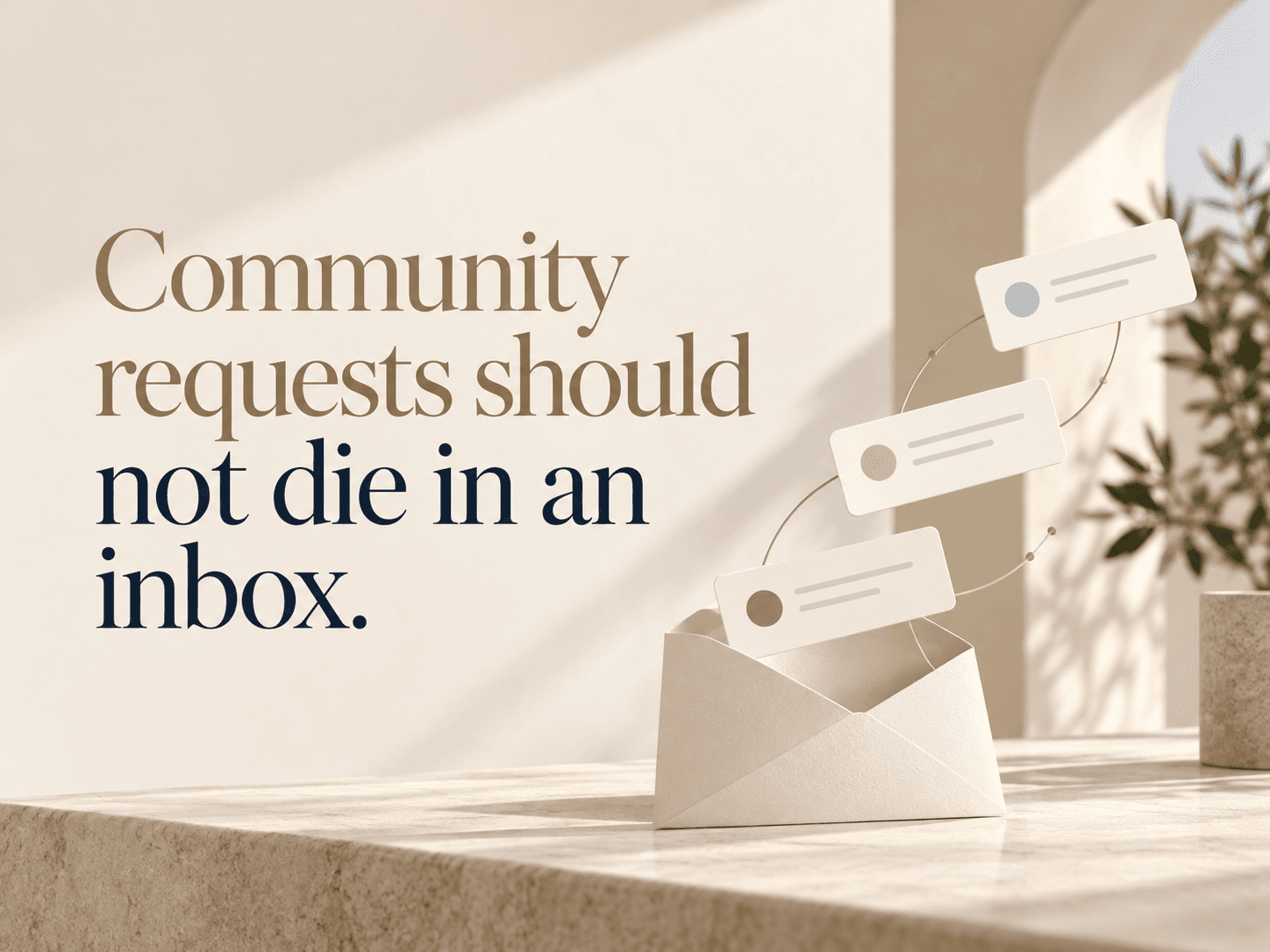
A member emails you at 8:14 a.m. asking for an introduction to a healthcare investor. At 10:40, another member replies to an event email saying she is hiring a product leader. By lunch, someone else has asked whether anyone in the community understands university partnerships. None of these requests is difficult on its own. The difficulty is that they arrive inside an inbox that was never designed to become your community's memory.
For community managers, email is often where the most valuable member intelligence first appears. It is also where that intelligence disappears. A request gets answered, the thread gets archived, and six weeks later the manager is trying to remember who was hiring, who wanted an introduction, or which member had offered to help.
02How this differs from community email tools#
Platforms such as Glue Up, Higher Logic and Hivebrite already connect community operations with email, campaigns, notifications or member records. That is valuable. The opportunity Virre is pursuing is narrower and more relationship-oriented: understanding the meaning inside the inbound message and turning it into usable member context.
The difference is between storing that an email was sent and understanding that a member is now looking for an investor, hiring a VP, attending a specific conference, or waiting for an introduction.
03What the community manager should see#
Imagine opening a member profile and seeing not only title and company, but also current asks, offers, recent conversations, events attended, introductions requested, introductions completed and follow-ups promised. That gives the manager a much better answer to the daily question: “Who needs something from this community right now?”
It also makes the community less dependent on one manager's memory. When a team grows, changes roles or adds chapter leaders, the context stays with the community rather than walking out with a person's inbox.
04Why this matters for engagement and retention#
Community engagement is difficult when outreach is generic. It becomes easier when communication reflects what members actually told you they need. A member who asked for hiring help should not receive the same next action as someone seeking a mentor or looking for customers.
That is the larger idea behind relationship intelligence for communities: listen once, remember well, and act on the context later.
05FAQ
It can when email is connected to the member system and AI is used to identify structured information such as the person, request, topic, urgency and follow-up. The important design choice is making the extracted information reviewable rather than silently treating every sentence as a permanent fact.
Not exactly. A membership CRM stores member records and activity. Relationship intelligence adds the reason a relationship matters now, including needs, offers, promises and timing.
Tags are useful, but they still require someone to notice the request and maintain the tags. Automated extraction can reduce that manual step and preserve more context than a single label.
See how Virre is building relationship intelligence for communities: https://www.virre.ai/solutions/communities